 Iker Aguirre
The Tipping Point: The Small Percentage That Changes Everything
Our society is in deep crisis. Politics, education, healthcare, the economy, the family: no pillar is spared. The challenges are huge, and resistance to change runs deep. Giving up can look like the sensible choice. But what if a small percentage of committed people were enough to tip the whole syst
Look anywhere and you'll see a system in deep crisis. Politics, government, education, agriculture, healthcare, the economy, the family, religion. Not one of the pillars our society was built on escapes that hard truth. The world is coming apart at the seams. And when you run into closed doors and stubborn resistance to change, it's tempting to throw in the towel. But what if it didn't take much for the world to tip the right way? That's the hope impaKt leaders carry.
The Critical Avalanche Theory: How Deep, Positive Change Begins
When things are a mess, complexity rules. And our world is one big mess.
That's why we're going to turn to complex systems theory to make sense of it. Don't worry. I'll keep it simple. In 1987, researchers Per Bak, Chao Tang, and Kurt Wiesenfeld studied something called “self-organized criticality.” It's a mouthful. It describes how a system in a critical state can reorganize itself on its own. Put simply: when everything goes sideways, how do things sort themselves out without anyone in charge?
The idea of a “critical state” matters here. Without it, the theory we're about to explore wouldn't work nearly as well. A critical state is a hidden imbalance. It rests on one or more fragile balancing points.
In other words, it's the story of Western society. Let's be honest: it's held together with duct tape and prayer.
In a critical state, small disturbances can set off chain reactions. And those chain reactions can lead to massive events.
Picture a snowfall. At first, the snowpack is stable. Then the storm keeps raging, and the snowpack reaches a critical state. At what point does it turn into an avalanche and bring the whole system down? How many snowflakes have to land before they move a mass that size?
The answer gives us the Critical Avalanche Theory. Hold on tight, because it's going to inspire you!
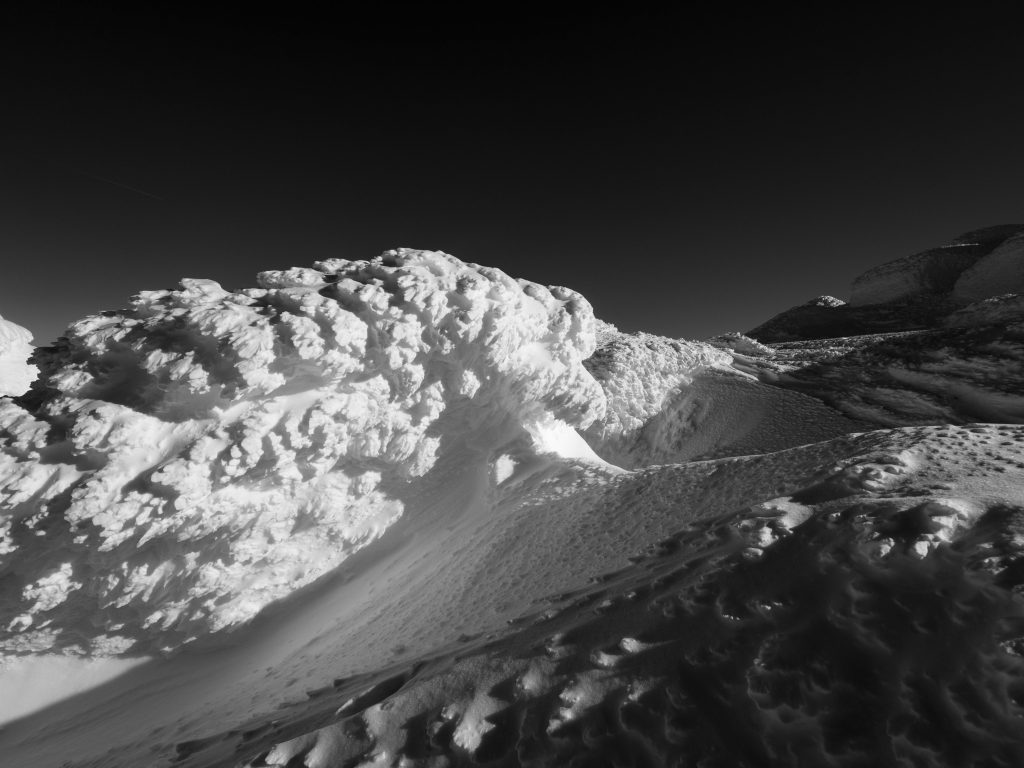
The Tipping Point: Does It Take 10% Leaders or 10% Crazy Ones to Change the World?
Flake after flake, the new snow creates an imbalance that gets harder and harder to offset. The fragile balancing points that held everything together finally give way. According to the Critical Avalanche Theory, 10% of a mass that's out of balance is enough to tip the whole thing.
Put another way: all it takes is 10% crazy ones, dreamers, or committed leaders working for renewal to tip an entire system!

Why Aim for a Positive Tipping Point: 2 Key Reasons
10%. If you're ready to act, that number is within your reach. Here's why.
1. Most of the communities you work in are human-sized. That's true even in very large markets. So 10% of your community is often a very reachable number of people: a few hundred, maybe a few thousand.
2. Needing 10% of critical mass to trigger an avalanche doesn't mean you need giant 150-ton snowflakes! Sometimes one ordinary snowflake, just like all the others, is enough to set everything off. Why? Because other snowflakes did their work first. They landed in the right place before it did. Like the hummingbird in the old legend, carrying one drop of water at a time to fight a forest fire, they did their part.
impaKt and the Tipping Point: A New Era of Conscious Leadership
Every action is like a snowflake. It adds to the others and prepares the ground. Then one day, an avalanche turns the dream into reality. That's the secret behind all impact. That's the secret of the Avalanche Theory.
And it comes down to 2 things:
1. The snowflakes (read: your actions) keep landing in the same place
2. The snowflakes land at the right time, and they keep coming
This works for tipping a system. It also works for your projects and your life. At first, it feels like a grind. You're working hard for very little, maybe for nothing. Then the first results come in. The snow starts to build up. The results look promising, but they're not enough yet. So you keep pushing. It keeps snowing. And then one day, the effort pays off. Often it's some “little thing” that makes all the difference. A coincidence. A lucky break. Something tiny. And everything tips. One snowflake, and you've got an avalanche! Can you believe it? One snowflake!
You can apply this to your own life. But it also works at the level of whole systems. The Avalanche Theory describes a force beyond measure: the power of the group and of ordinary people taking action. That force is hard to accept, because you can't see it. Yet it holds the key to a quiet, invisible revolution. And precisely because it's quiet and invisible, it's the most powerful option you have.

From Chaos to Clarity: A Paradigm Shift That Drives Positive Change
To fully tap into this power, we need to accept a few conditions.
1. Shift from “Me” to “We”
Self-centered, ego-driven individualism is the biggest threat to this theory. It isolates people and their actions in a closed, distrustful mindset. Every snowflake falls on its own, in its own corner. And day after day, billions of tons of energy melt away, like machine-made snow on a beach in July.
2. Trust the Power of Ordinary People
Trust is an act of faith. But when physics and complexity theory are on your side, faith gets easier. So how do you believe in actions you'll never see? By making sure many of us are pushing in the same direction. We move from cutthroat competition to wholehearted cooperation. And to keep your inner fire burning, nothing beats joining networks of committed leaders. They'll help you see how big your shared challenges really are. Through them, their efforts, and their wins, you'll realize you're more than a snowflake. You're a living force that can change the game.
3. There Are No Good Guys and Bad Guys
No system tips anywhere unless people give it their blessing, whether they know it or not. Yes, some forces work hard to push things their way. But sorry, conspiracy theorists: the real question isn't whether there are villains among them. There have always been villains. The real question is this: where is the alternative leadership that will tip the system the other way?
This isn't good guys versus bad guys. It's a massive contest of influence. Who can win over a critical mass of committed people, so the avalanche falls one way and not the other? That's where the game is won or lost. So the only question that matters is: whose influence are we serving?
4. Break Free from Voluntary Servitude
Voluntary servitude is a soft middle of unhappy people who let things slide. They stay put out of comfort and checked-out defeatism. Their main activity? Criticizing and attacking those in power (and every other villain). Meanwhile, they go along with those same decisions and never act to change anything. Evil may be everywhere, but it's also a convenient excuse. It lets us off the hook!
Sure, things are bad. But since no one does anything about it, it's easier to blame someone else. That way, we never have to own the servitude we signed up for!
Sadly, people often prefer the apathy of an unhappy but comfortable servitude. They pass on actively pursuing a freedom they choose, one that could bring happiness but always demands effort. Étienne de La Boétie, the 16th-century philosopher who wrote the Discourse on Voluntary Servitude, must be rolling in his grave!
Everyone Has a Part to Play: Toward Positive Collective Change
Look anywhere and you'll find systemic challenges. There's plenty to go around, for every taste and every talent.
The size of the task is mind-boggling. 10%? That's nothing.
But to get there, a lighthouse has to switch on first. That lighthouse isn't a messiah. It isn't a hero. And it's definitely not a savior who will change the world.
The myth of the hero died with complexity. A new story is emerging: the story of shared light. The lighthouse that needs to switch on is yours.
A lighthouse shines and pushes back the darkness around it. Its beam reaches as far as your vision, and your self-confidence, can carry it.
Each lighthouse shines with the light of its own actions. And one day, when the beams meet, the darkness disappears.
A new reality becomes possible.
And the avalanche begins.
Konxus and impaKt are here to help switch on the lighthouses.

“Even in the darkest night, there is always a glimmer of hope.” – Winston Churchill
Key Takeaways
Iker Aguirre walks us through the Critical Avalanche Theory and shows that a new kind of leadership is possible: impactful, transformative, and responsible.
- Small disturbances in our lives can have major ripple effects.
- It can take just 10% dreamers and committed leaders to tip a situation.
- Every snowflake is an action. It adds to the others and prepares the ground so that one day, an avalanche turns the dream into reality.
- That means thinking collectively and trusting others.
- Everyone has to do their part.
- When everyone's light meets, the darkness disappears. A new reality becomes possible.
Originally published in French on Konxus Média ↗