 Iker Aguirre
5 Habits That Will Help You Sleep Better at Night
Simple, proven habits you can start today to sleep better at night and finally put your sleep problems behind you.
Are your nights rough? Do you struggle to fall asleep? Does insomnia keep coming back? Can you even remember what your face looks like without dark circles under your eyes?
In France, sleep disorders have been treated as a public health issue for about twenty years. A study by the INSV, France’s National Institute of Sleep and Vigilance, found that 73% of French adults wake up at least once a night. And 36% suffer from at least one sleep disorder, such as insomnia, hypersomnia, parasomnia, or sleep apnea.
Here’s the thing. The secret to a good night’s sleep often lies in the day before it. In this article, you’ll find what’s really going on, plus practical solutions and habits to help you sleep like a baby again.
Want to go deeper? Listen to episode #45, “Dormez enfin comme un bébé” (“Finally Sleep Like a Baby”), on our podcast Une Alchimie de l’Éveil.
Looking for the key to joy and well-being? Start by getting a good night’s sleep. — Iker Aguirre
5 practical tips to sleep better at night and improve the quality of your sleep
- Why balancing light and darkness helps you sleep like a baby
During the day, soak up natural light. To start the day right, your body needs sunlight: 5,000 lux or more.
Indoor lighting isn’t enough. It only delivers about 1,000 lux. So use the first 30 to 90 minutes after you wake up to take a walk outside.
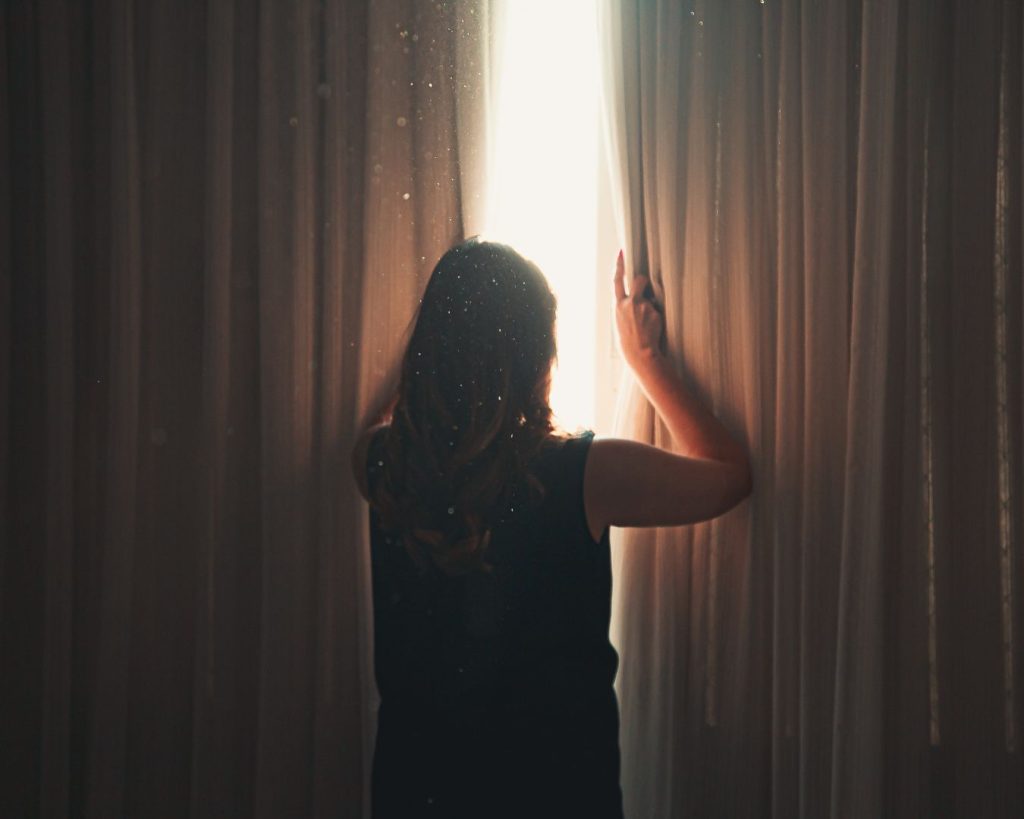
In the evening, ease into the night. Dim the lights at home, and make your bedroom completely dark. Close the blinds and draw the curtains. Darkness triggers melatonin, the sleep hormone. Keep the room quiet, too. Silence is part of truly restful sleep.
- What’s the ideal temperature for sleep, for your body and your bedroom?
To fall asleep, your core body temperature needs to drop by about 1 to 3°C (roughly 2 to 5°F).
You can help your body cool down and get ready for sleep. First, keep your bedroom at or below 66°F (19°C). Air the room out during the day.
At bedtime, layer a few blankets so you stay cozy. Just don’t bundle up too much. That way, your body can regulate its own temperature while you sleep.
Take your socks off before bed. Your partner will thank us for that one. And while a sleep mask is great for blocking out light, skip it if your bedroom isn’t cool enough. Here’s why. Socks and masks cover areas that help regulate your body temperature: the soles of your feet, the palms of your hands, and your face. When those areas are covered, they can’t do their cooling job as well.
- Eat well to sleep well
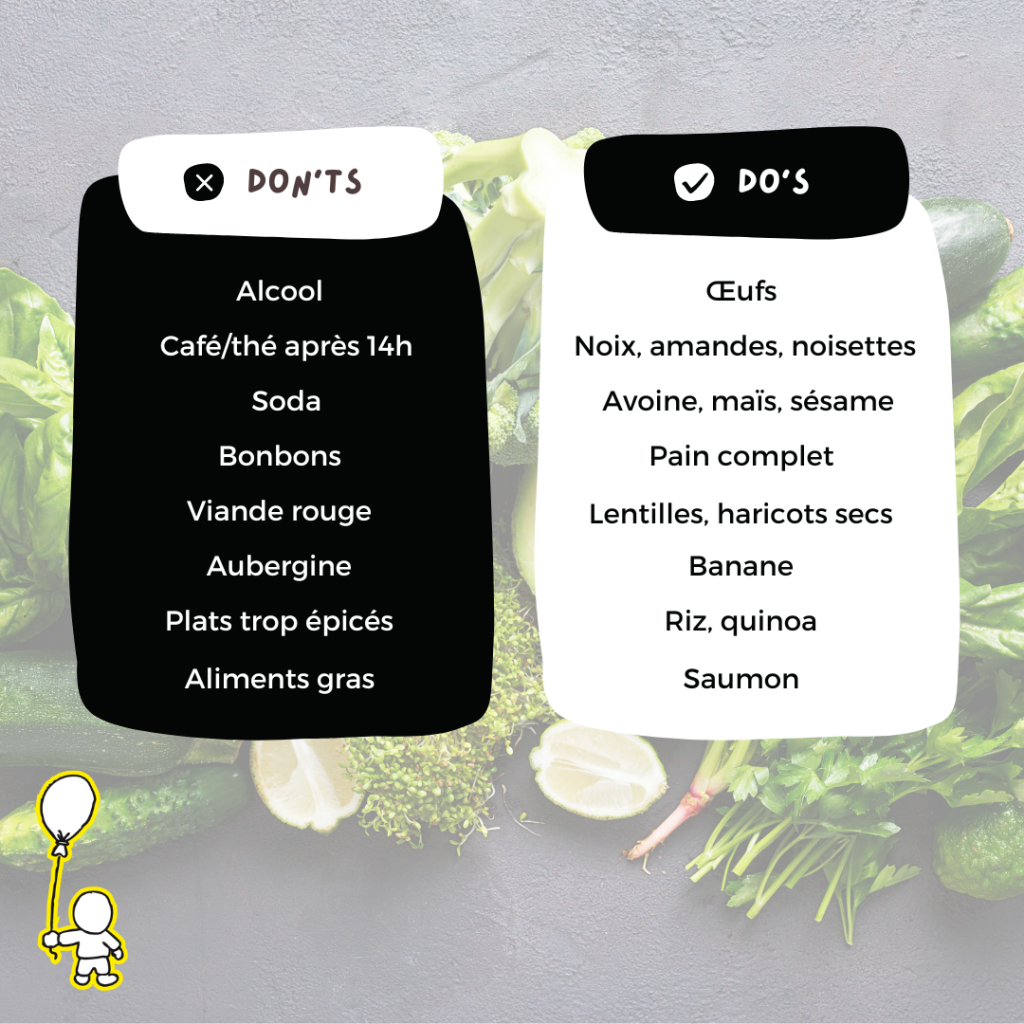
What’s on your plate, and when you eat it, affects how well you sleep. So keep dinner balanced: not too light, not too heavy or greasy. Ideally, finish eating at least two hours before bed. Digestion raises your body temperature.
A word of caution. Go easy on alcohol and stimulants like caffeine, tea, and nicotine, in the evening and during the day. They can wreck the quality of your sleep.
Our advice for coffee lovers: enjoy your last cup after lunch, around 2 p.m. If you have more than 100 mg of caffeine after 4 p.m., it will take you longer to fall asleep. And you’ll sleep less.
- How to take a nap that actually recharges you
Yes, you read that right. We’re telling you to sleep so you can sleep better.
Napping can do a lot for your health and your day-to-day well-being. Above all, it can improve your sleep overall.
The benefits of napping:
- Sharper focus. A 20- to 30-minute nap is especially helpful if you need to stay alert for long stretches.
- Less stress. A nap gives your mind and body a chance to rest and recover.
- Better memory. Research shows that napping can improve long-term memory.
- Less fatigue. A nap can ease both mental and physical exhaustion. That matters if you have a packed work schedule, or if you need to stay alert to drive or handle other demanding tasks.
- Better mood. Taking a short break in your day for a quick nap can lift your mood and help you let go of negative emotions.
Keep in mind that length and timing matter. Short naps, around 20 to 30 minutes, usually work better than long ones. And it’s best to nap early in the afternoon so it doesn’t cut into your sleep at night.
- Can exercise help you sleep better?
Regular exercise can improve your sleep in several ways. Here are a few:
- Exercise is one of the best ways to reduce stress and anxiety. Those are two of the main causes of sleep problems.
- Regular exercise helps you build a daily routine, with consistent times for waking up and going to bed. That keeps your body’s internal clock on track, so you sleep better at night.
Any activity that gets you moving creates what we call “good tiredness.” It helps you fall asleep faster. One caveat: do intense workouts earlier in the day, or at least two to three hours before bed. Gentle yoga, relaxation exercises, and meditation are fine any time.
During exercise, and for several hours afterward, your body temperature rises. But to fall asleep, your body needs to cool down. If you work out right before bed, your body may struggle to cool off. That can delay sleep.

Our advice if you work out in the evening:
- Drink water regularly while you exercise.
- When you get home, take a warm shower or bath, or spend some time in a sauna. It helps regulate your body temperature and relax.
- You can also have a warm drink, like an herbal tea (valerian, chamomile, lemon verbena, lemon balm, passionflower) or a glass of warm milk.
Want to learn more about sleep? Listen to episode #45, “Dormez enfin comme un bébé” (“Finally Sleep Like a Baby”), on our podcast Une Alchimie de l’Éveil.
A few fun facts and oddities about sleep:
- Let’s start with Cristiano Ronaldo, soccer’s heartthrob and one of the best players in the world. He works with a sleep coach, Nick Littlehales. Littlehales has him follow a polyphasic sleep schedule: five 90-minute sleep sessions a day. The goal? Peak performance.
- You can’t talk about sleep without talking about snoring. Who hasn’t suffered through a night next to a world-class snorer? Pure torture. But it could be worse. One world snoring record was clocked at, brace yourself, 92 decibels! To put that in perspective, a chainsaw tops out at around 110 decibels.
- Rumor has it that one of the best ways to stop snoring is to play the didgeridoo, the Aboriginal Australian wind instrument. And by the way, the medical term for snoring is “rhonchopathy.” Honestly, you have to wonder whether the real patient is the person lying next to the snorer.
- We all know sleep deprivation is bad for your health. But as always, someone had to go and set an absurd record. An American named Randy Gardner stayed awake for 11 days straight in the 1960s, as part of a sleep study involving Stanford University. It earned him a spot in the Guinness Book of World Records. Guinness has since dropped the category to avoid deaths. Yes, sleep deprivation can kill you. All that for a moment of fame. Guinness decided it just wasn’t worth it.
- Finally, have you noticed that babies always sleep blissfully in the car? Ford noticed too. The company created the Max Motor Dreams crib, which simulates a car ride. It supposedly works like a charm at home. So well, in fact, that you won’t find a single one for sale, online or anywhere else. It smells like a marketing stunt from a mile away, a clever way to get press out of a lot of hot air. Too bad. It was a great idea.
Originally published in French on Konxus Média ↗