 Iker Aguirre
A Conversation with Eñaut Jolimon de Hareneder: The Collective in Service of Purpose
For Eñaut Jolimon, Alki shows what a company can be. Roots in a region, a strong collective and a clear sense of purpose let it get through major change without losing who it is. Alki is run as a cooperative, and it has reinvented itself more than once. Along the way, it has built a kind of leadersh
Eñaut Jolimon de Hareneder leads through the collective. For him, the team, the region and the long term come first. As head of Alki, he champions a cooperative model where innovation, people and local craftsmanship move forward together. The goal is a company that lasts and that means something.
Iker: In times of heavy turbulence, where do you find the inner strength to hold on?
Eñaut: We're still a group of men and women riding the waves. Some are setbacks. Some are tidal waves. Some are just ripples. Everyone rides them in their own way. At the same time, there's a very strong desire to contribute to the project. Longevity is one of our values. If you step back a little, the longevity we really aim for is that of the social project, the collective project. We share a conviction that drives us to succeed and move forward. And we're not talking about personal success. We're talking about the project succeeding. That's a shared success.
Iker: Is being connected to something bigger than yourself one of the keys to success?
Eñaut: Clearly, yes. It's one of the reasons I joined Alki. You commit to more than a job description. You commit out of belief, conviction and will. How far that goes varies a lot. It depends on each person's life experience. But yes, we're attached to something bigger than any one person, and we believe in it.
Virginie: When you buy a piece of Alki furniture, what do you take home beyond the object itself?
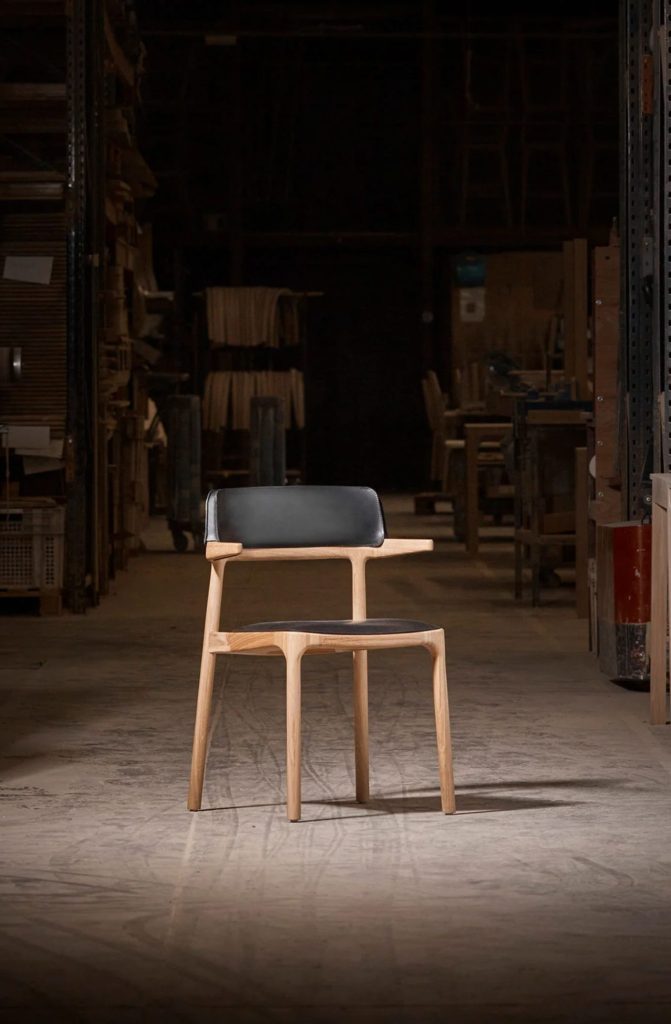
Eñaut: You take home a sense of belonging. Or at least a connection to an approach built on a strong social commitment. You also take home real care for the environmental impact of what we do.
You get the feeling that you took part in something collective. Something beyond yourself. What you did was an act of activism.
Iker: So could we say your furniture is alive because of all this?
Eñaut: I'd say Alki's promise is that all of this comes through in every piece.
Iker: How do you survive as a cooperative in an economy that wasn't built for that model?
Eñaut: I actually see a lot in common between a traditional company and a cooperative. You can't live only in the cooperative dream and stop talking about economics, production or efficiency. Those aren't dirty words. The cooperative can't last without them. We're still a business. We need to turn a profit. But to get there, we try to organize differently. The cooperative side is one person, one vote. At our general meeting, seniority and rank don't count. We're all equal members, looking each other in the eye. The slightly schizophrenic part is that there are 48 of us. Every one of us is both an owner and an employee. Those two hats sometimes clash. As an owner, you want one thing. As an employee, you want another. But when you believe you're contributing to something that carries you, you readjust. You realign.
Virginie: How does hiring work, given that every new hire is a future member-owner?
Eñaut: We talk about it very openly, because we're hiring a future owner. We get to the point fast. If you just want to try something new, don't bother. It's a trial period for both sides. That's because it's complex for an outsider. The day you become a member, you invest ten and a half months of take-home pay into the company's capital. In other words, it costs you something to come work here. Anyone who joins us already has the desire, the motivation and the full picture. It's a real commitment.
Virginie: How did you bring Alki's DNA into the design of your new building?
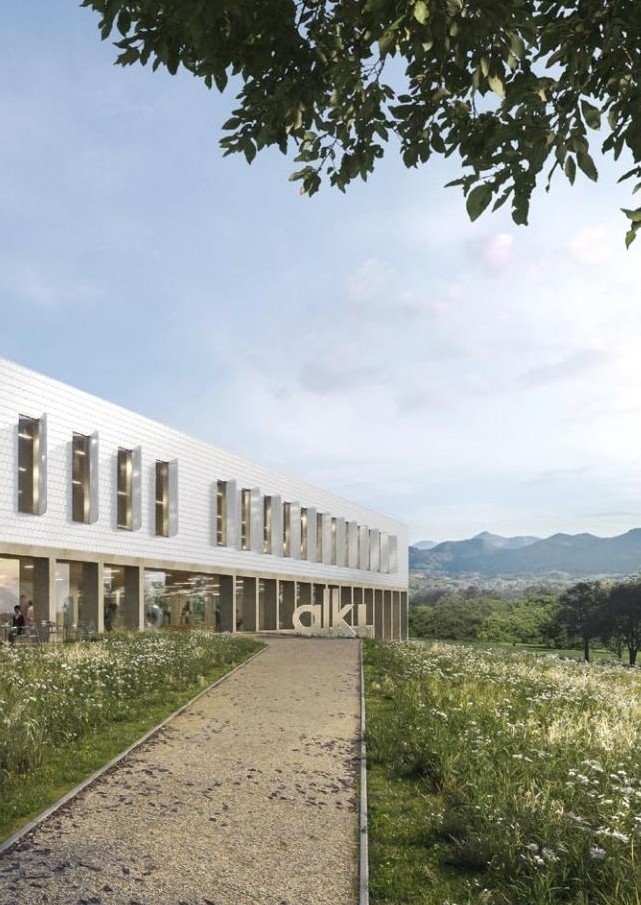
Eñaut: We pushed the architects to understand Alki's DNA. We held a competition between three firms. We chose Leibar et Seigneurien because they best understood Alki as a manufacturer. We could have built a campus with a workshop on the side. We didn't. It's a manufacturing workshop that houses everything else. The hub at the foot of the staircase was meant to be where everyone crosses paths. Production, offices, management. And visitors too: architects, clients, partners. That crossroads is powerful. The space is very well designed, and it welcomes everyone.
Iker: As CEO, how do you lead in a model where every voice carries the same weight?
Eñaut: I'm pretty pragmatic. I keep my feet on the ground. It comes down to trust. How do you earn it? For me, by staying straight and sincere in how you analyze things and in the direction you set.
And by trusting the project I'm part of myself. I think it works like a mirror. When you trust the project, you trust the teams.
Virginie: You have doubts like everyone else. What makes you feel solid?
Eñaut: Of course I have doubts, like everyone, every morning when I get up. Even more so right now. What gets me back on my feet? Believing in something. Then there's my role, and the ability to step back. My role matters because spreading anxiety would be a disaster. And stepping back lets me brush certain things aside before they get to me. I don't have a magic formula. I'm lucky to have a wife and kids who give me so much. And a close family here in the region who really sustain me too.
Iker: How does CSR fit into your philosophy?
Eñaut: We've been putting the CSR label on what we do for the past five or ten years. If you'd asked the people before us, they'd have said it was just common sense. Take local sourcing. Our cooperative culture means looking for skills close to home. Or choosing wood as our core material, mostly from French forests. Those were common-sense decisions. They weren't about meeting today's compliance checklists. That's been part of Alki from the start. What bothers me now is that you have to justify, measure and certify everything you do in CSR. Big companies will score better than small ones, because they can afford a dedicated person. That skews the picture. Our cooperative structure alone already checks a lot of CSR boxes.
Virginie: Fifty years from now, if Alki has succeeded, what will absolutely not have changed? And what might have?
Eñaut: What shouldn't change? That we stay true to the essence of the cooperative. That we remain an active player in our region. Creating jobs, driving the local economy, putting the region on the map. And that we help promote everything else that makes our region what it is. Food, farming, other industries too.
And what might change? I think a meaningful sign would be this: people see us as a benchmark for what we make, and also for how we do it.

Rapid-Fire Questions
If Alki were a tree?
An oak. Because that's what gives Alki its structure and its soul.
Which Basque word should every language in the world adopt?
Harremana. It means “relationship.” It's built from two words: “hartu,” to take, and “eman,” to give.
Fifty years from now, what will people say Alki really gave the Basque Country?
If it could be real, lasting visibility, that would be great. Far from the folklore that sometimes surrounds the Basque Country.
Eñaut, if you had to build one piece of furniture that captured the future you want, what would it look like?
I think it would still be a table. For everything a table stands for: coming together, time spent with others, good food.
Why manufacture here in the Basque Country?
Because we have the will and the know-how to do it.
Key Takeaways
4 Key Takeaways from Our Interview with Eñaut Jolimon de Hareneder
- Alki was built on both deep roots and reinventionFounded in 1981 by people determined to “live and work where they came from,” Alki has always protected its local roots while staying ready to change. The move from traditional furniture to contemporary design was a bold bet. The company needed it to survive.
- The collective sits at the heart of the cooperative modelAt Alki, success is a shared journey. Every member-owner carries both financial responsibility and a human project bigger than themselves. That project rests on trust, commitment and a lasting contribution to the Basque Country.
- Purpose and conviction drive decisionsAlki's founding activism has evolved, but its DNA is intact: make things locally, protect craftsmanship, and create a positive social and environmental impact. For Eñaut Jolimon, buying Alki furniture means joining a collective effort with real purpose.
- Agility and authenticity are what make a company lastIn a world of constant crises and change, Alki bets on adaptability, trust and sincere leadership. The cooperative wants to be a benchmark as much for its human and social model as for its products.
Originally published in French on Konxus Média ↗