 Iker Aguirre
How to Handle Fear When Your Life Is on the Line
Handling fear in a survival situation starts with one thing: you notice your emotions and accept them, without letting them take over. Fear is a useful alarm. But it can also freeze you in place. So breathe deeply. Assess the situation. Take care of the essentials first. Keep your focus on concrete
I spent 20 years of my career in board sports. I was obsessed with riding the best waves and the biggest mountains alongside the best athletes in each discipline. That obsession put me in the daily lives of the most extraordinary athletes on the planet: the extreme-sports junkies. These are men and women for whom facing death is just part of the job. For a long time, I couldn't stop thinking about them. How do they perform at their best under those conditions? What do they know about fear that the rest of us don't?
Fear is the compass that points to the unexplored parts of your life
Here's what I learned from the very best.
“I’m alive because I’m afraid”
Greg Long is a big-wave surfing world champion. In 2012, he was at Cortes Bank, 90 miles off the California coast, when all hell broke loose. A set of 50-foot waves pounded him, and he spent six minutes underwater. When he came back to the surface, people thought he was dead. Surviving was a miracle. Greg is no stranger to extreme sessions, and he says it again and again: “If I’m alive, it’s because I’m afraid.” We tend to picture these calm, stoic people who face the worst as made of something different. We assume they don’t know what fear feels like. That’s wrong. “We’re all afraid,” Long reminds us. Fear is their best advisor. It keeps them alert to how much risk they’re taking. “I dread the day I’m no longer afraid. Because that’s the day I could stop seeing the risks I’m taking.” And pay a very steep price.
“The first paddle stroke makes the fear go away”
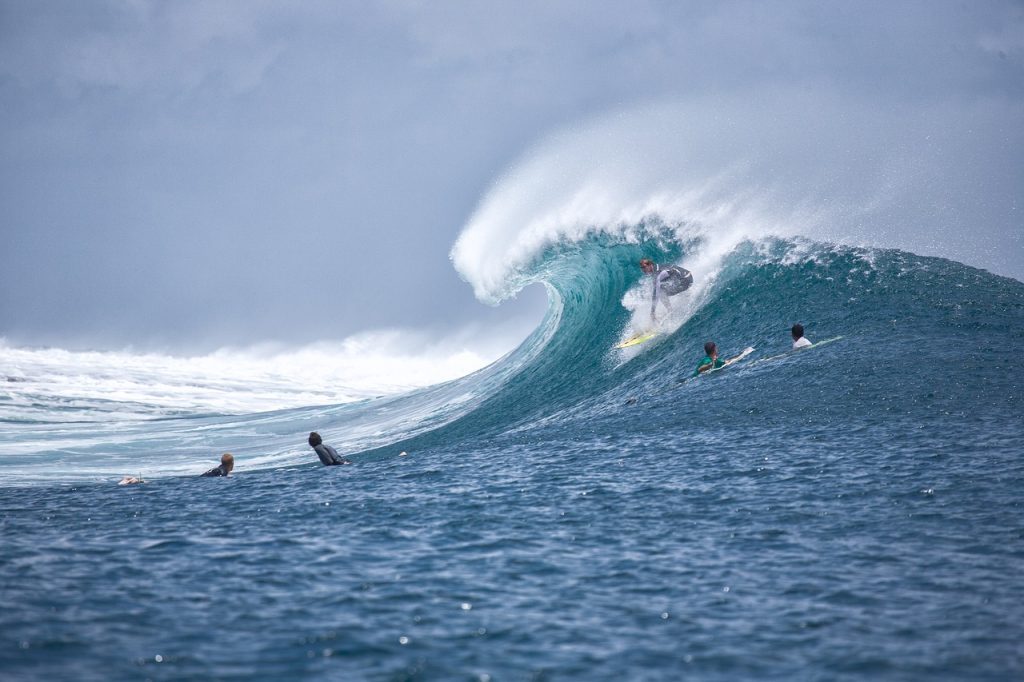
Eric Rebière was the first Frenchman in history to qualify for the elite tour of the World Surf League. He was a standout competitor his whole career. But his real passion was always big-wave surfing. He teamed up with Benjamin Sanchis until he retired. Together, they dreamed of riding the legendary 100-foot wave at Nazaré, Portugal. And they made that dream come true.
When asked how he deals with fear, he explains: “I’m frozen with fear at the peak. But the moment I take my first paddle stroke, the fear disappears. Once I paddle, all I think about is the action. Nothing else matters except getting down that wave. At that point, fear stops existing.” Neuroscience backs him up. Fear comes before action. It’s a powerful way of warning you about risk. But once you commit to the action, fear steps aside and makes room for performance. Your senses and skills are at their peak. Because the only thing that matters now is getting clear of the danger.
How to visualize success to get past fear
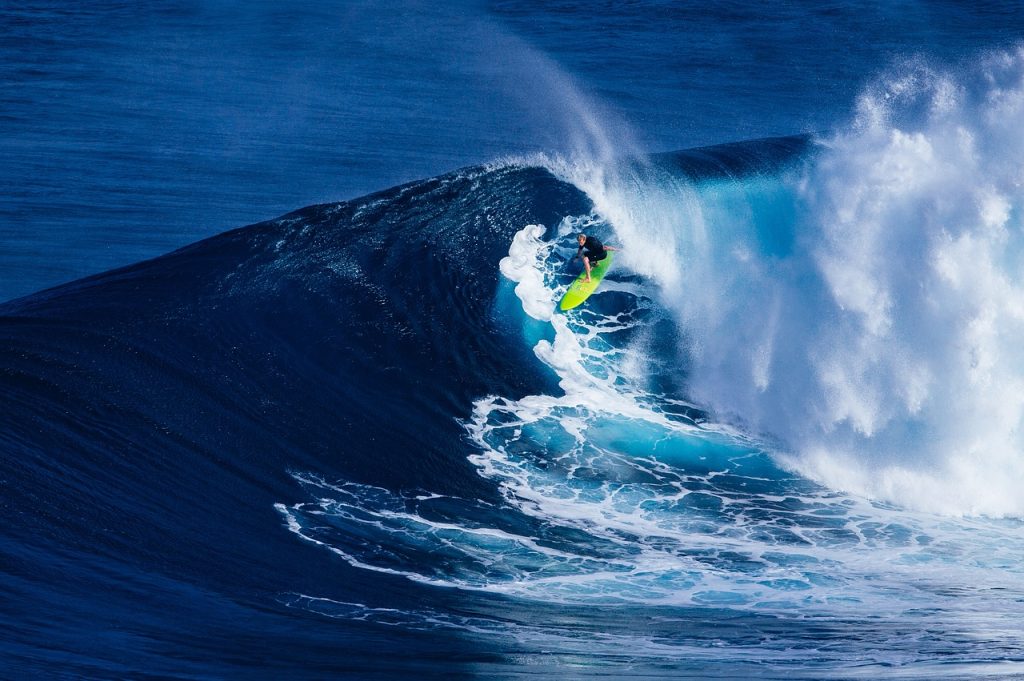
Mads Jonsson of Norway and Nicolas Watier of France spent years chasing Guinness and world records for the highest and longest snowboard jumps. Nicolas was my business partner. So was Xavier Marcou of France, who added to what they shared here. “As I get close to the takeoff, I hit speeds of over 60 miles an hour. At that speed, the air pressure is so strong that the smallest mistake in your body position changes your trajectory. And then a crash is guaranteed. On jumps that big, one mistake means the hospital, or an injury that ends your career,” Mads explained, a few days after breaking one of those records. “I know exactly what’s going to happen at every moment. I control every inch of my trajectory. Nothing is left to chance. And if it doesn’t feel right, I don’t go. No matter what that means for the sponsors, the media, or anyone else with influence who showed up,” Nicolas added.
Then Xavier shared the secret they all had in common: “At the top of the run-in, I visualize the jump. One run is all I need to anticipate everything. The speed. The snow and how wet it is. The compression. How every move affects my trajectory. I know it with surgical precision. That’s what experience gives you. From takeoff to landing, I visualize every moment and every move. I have to feel all of it. First I do it in slow motion, then at full speed. I have to land it perfectly three times in a row. Then I have to feel the joy explode inside me at the end of the trick. If I feel at peace at that moment, I know I’m ready. If anything feels even slightly off, I start over. I require three perfect reps in a row. And if I get there, the very next second I signal everyone and I drop in. I don’t leave any room to think. Taking action keeps doubt from creeping in.”

The only limit to fear is your preparation
Justine Dupont is the best-known and most respected French surfer in the world. She lives in Nazaré and teams up with her partner, Fred David. She has racked up women’s records and the sport’s most prestigious awards by taking on the most monstrous waves on the planet. “People think we’re crazy. They think we take reckless risks. But they have no idea how intense the preparation is for these brief moments of grace.
We’re very aware of the risk and the conditions we face it in. Nothing is left to chance. Everything is carefully calculated. It takes thousands of hours of training to reach that level of precision. Anyone who skips that is reckless. Fear will always be there. But when you’re well prepared, you know you have what it takes. In that moment, what grabs you by the gut is the drive to pull it off. That’s the only reason all those sacrifices make sense.”

Step by step, always in the right place
Roch Malnuit has lived two extreme passions. The first is steep-slope snowboarding, where he pulled off several first descents in the high mountains of Chamonix. The second is BASE jumping. He founded France’s first BASE jumping school, which is also the most respected one in the country.
Facing risk on your own is one thing. Taking people to jump off a cliff for the first time, on purpose, with a parachute on their back? That’s something else entirely! “If you want to last, risk has to be measured and occasional.” Then he adds: “There are two very dangerous zones. The first is the beginning. You don’t know the sport yet, and you can make costly mistakes. The second is the end. Nothing has happened to you in 20 years. You have the reflexes. You ask yourself fewer questions because you’ve done it 10,000 times. That’s when you slip, because you let your guard down. In between, you’re always learning. You’re always looking for answers and asking questions. So you’re much more aware.” Then he walks us through his teaching method, which is precise down to the last detail. (Remember, he takes people to jump off a cliff on purpose!) It all comes down to structure. And to carefully designed steps.
“That’s the secret to self-confidence.”
And the glue that makes it all work is…
Two pieces are still missing. They go hand in hand, and both are essential:
- emotional intelligence
- energy management
The first means getting to know your emotions, fear included, and learning how to act while you feel them. You can learn this.
The second means knowing how to use your energy to get the results you want, efficiently, whether you’re taking action or dealing with people. You can learn this too.
When the two come together, one plus one equals three. You discover how to separate your emotional energy, which is incredibly powerful, from the message it carries: doubt, overthinking, and so on. At that point, peak performance and results become one and the same. And that’s when you catch yourself dreaming: “I wish I could bring this into my life, my projects, my company!” The crisis we’re facing demands nothing less.
And it can be done.
All these insights have been broken down, modeled, and turned into one unique method. It was built by and for leaders and executives of every age and level.
Important note: these quotes were carefully reconstructed from the author’s memory. They are true to what was shared, but the exact wording may differ from what appears in this article.
6 key lessons:
1. DON’T RUN AWAY
Fear isn’t bad. It exists to keep you safe. Don’t run from it, and don’t turn your back on it. It will always be part of your life, so get to know it instead.
2. TAKE ACTION
Fear warns you about the risks of acting. But it can also hold you back. So can the fear of being afraid. How many opportunities have you let slip by because you were scared to try? Taking action wipes out fear and unlocks the resources you already have.
3. PROGRAM YOURSELF
Decide when you’re going to act. Train yourself to switch your mental focus with a physical cue that says “Go!” Make it a non-negotiable rule. Once you’ve made that move, there’s no turning back. The only way forward is action.
4. VISUALIZE
Discover the power of visualization. Tap into how your brain works and hack your performance. Your brain has a hard time telling the difference between what it imagines and what it actually experiences.
5. PREPARE
Don’t go in cocky and unprepared. The bigger the risk, the more carefully you need to prepare. And preparation isn’t something you wing. You plan for it and work on it every day, so you’re ready when that 100-foot wave comes crashing down on you.
6. BUILD STRUCTURE!
Steps, moves, progression, mentoring… When you face fear, luck starts working for you once you stop leaving anything to chance.
Originally published in French on Konxus Média ↗