 Iker Aguirre
The Power of Cold: How to Unlock Your Potential
Here's a simple way to bring cold exposure into your daily life, even if you hate being cold. It's a real boost for your health, your energy, your well-being and your potential.
In this article, we'll look at a practice that has become hugely popular lately: cold exposure.
You'll learn how it can unlock your potential and build your capacity to adapt. The idea is to train your brain. You'll live better and handle stress better.
For a lot of people, cold exposure sounds intimidating. Especially if it means spending time outside in the dead of winter. But the cold has many health benefits. And they go well beyond a stronger immune system. So yes, sometimes freezing your butt off is actually good for you.
First, we'll share the secrets of doing cold exposure right. Then we'll cover the traps to avoid at all costs. We'll also show you the benefits, and how to get them without turning your routine upside down. Finally, you'll get a clear, step-by-step method to make the most of this healthy practice.

Want to unlock your potential and become more adaptable? Few things work as well as cold exposure. The method is simple. It takes some effort, but not a lot. Two or three sessions are enough to start feeling the benefits. The results are truly amazing.
Cold exposure is one of the biggest trends in wellness right now. And for good reason.
A big part of that is thanks to Wim Hof, the Dutchman known as The Iceman. He holds a whole string of Guinness World Records. And a growing body of science has studied his method of extreme cold exposure. He's the one who made this trend go mainstream.
Plenty of people have tried to criticize or disprove the Wim Hof Method. They all ended up in the same place. Wim Hof found a way to hack the human body. And there's plenty of scientific evidence to back it up.
So a new, very “cool” trend has spread around the world. The practice feels good. But above all, it looks spectacular. For social media creators, it's pure content gold.
Countless young influencers now plunge, nearly naked, into ice baths or frozen mountain lakes. Most of them don't really know the right methods or the actual benefits. Still, their videos rack up record numbers of views.
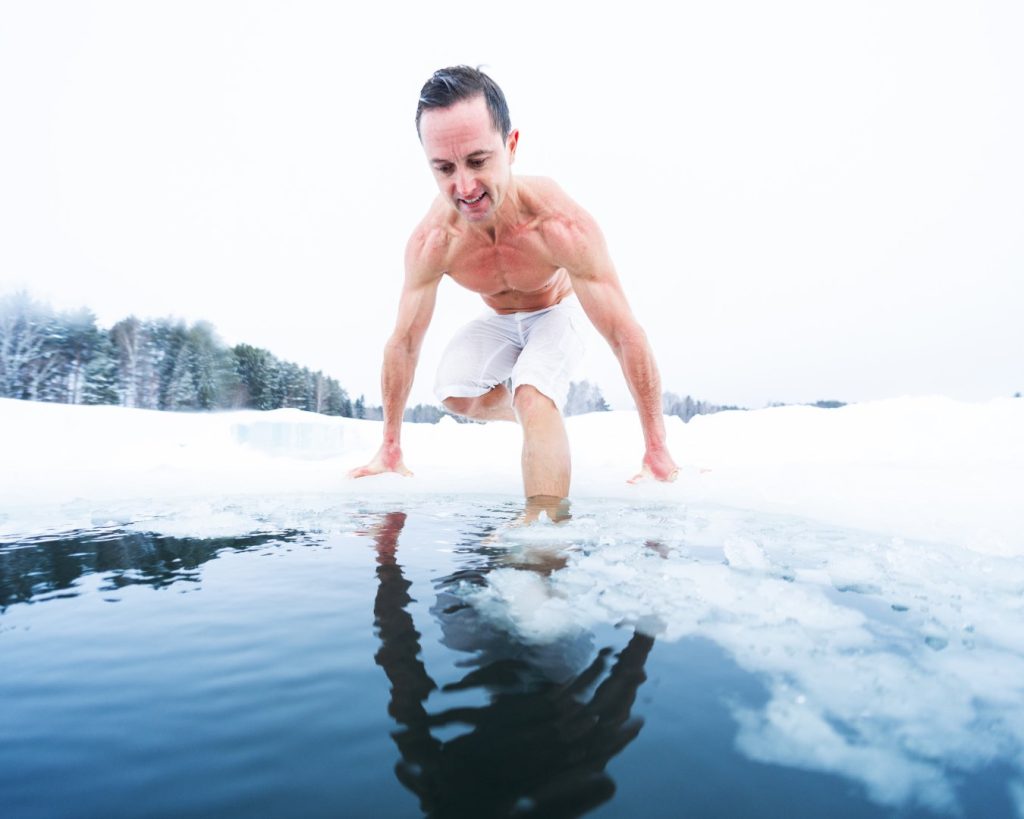
And get this: there are even brands that sell cold plunge tubs. They look like big chest freezers. You fill them with water, the water stays at 35 to 39°F, and all you have to do is get in.
Not ready to go that far? Already thinking “Brrr!” just reading this? Don't worry. We'll show you a gentler method, made for people who hate the cold as much as we do.
For this article, we drew on the work of Wim Hof. We also relied on Stanford neuroscientist Andrew Huberman and Susanna Søberg of the University of Copenhagen.
The Benefits of Cold Exposure for Your Energy and Performance
Here's what you can expect if you try the exercise at the end of this article:
- Sharper mental clarity
Cold exposure clears your head. It increases your production of norepinephrine, a hormone that stimulates the brain and boosts alertness. You'll feel more awake, think more clearly and focus more easily.
- More strength in the face of stress
Cold exposure makes you tougher in stressful situations. You'll feel better equipped to handle them. When you're exposed to very cold temperatures, your body switches on survival mechanisms to hold its core temperature. One of them is the release of endorphins. These hormones can lift your mood and ease your stress.
- A feeling of strength and energy all day long
Cold exposure gives you a sense of strength and energy that lasts well into your day. It revs up your metabolism. It reduces muscle fatigue. It helps lower stress. The result: you feel stronger and ready to take on whatever the day brings.
- More joy and motivation
- Greater resilience
Cold exposure builds your ability to handle challenges and push through hard times.
- A better ability to keep your cool (pun fully intended)
You'll also stay clear-headed when things get tough. And all of this comes from changing one small detail in your day. It doesn't have to cost you any time on your calendar. Not bad, right?
The Power of Cold: What Is It Really, and How Does It Unlock Your Potential?
Your Capacity to Adapt
It all starts with your capacity to adapt. This is your body's ability to handle a stressful situation without harming itself or draining its resources.
The problem is the way we live today. Modern lifestyles are often chaotic or high-pressure. And they tend to lead to chronic fatigue and constant stress.
We draw on our capacity to adapt all the time. We keep asking our bodies to adjust to one situation after another. So we tend to push past what that capacity can handle. When we do, we start eating into our reserves. That's when the body goes into survival mode.
But the more we do this, the more our reserves shrink. And our capacity to adapt shrinks with them. Most of the time, this pattern ends in burnout, and in having to rebuild everything from scratch.
Overloading your capacity to adapt wears down your well-being and your health.
How Can You Build Your Capacity to Adapt?
Now we get to the heart of the cold exposure method. The idea is to create stress on purpose.
A quick bit of science: under stress, your brain goes on alert. To respond, it releases hormones such as epinephrine and norepinephrine (also known as adrenaline and noradrenaline), followed by cortisol.
The hormonal response is the same whatever the stress. But the way your body and brain react is not. There are two kinds of situations:
- Stress you choose (positive):
When you choose the stress, you get a surge of energy. You feel fired up and motivated.
- Stress you don't choose (negative):
When stress is forced on you, as it sadly is most of the time, it takes a toll. Your health declines. You lose your edge. You get aches, tension and a long list of problems linked to chronic stress.
The difference is huge. The goal of this exercise is to create controlled, artificial stress. That way, you get used to living through stressful moments.
You'll teach your brain to handle these moments with more mental strength. You'll build motivation in the face of discomfort, along with willpower and discipline. So when real stress shows up, you'll be stronger. You'll be better able to face it without losing your footing.
And the ideal exercise to make all of this happen is cold exposure.
Putting It into Practice: How Cold Exposure Unlocks Your Potential
The most effective form of cold exposure is the cold bath. Next come cold showers. In third place is being out in the cold, in winter or in the mountains, for example.
A word of caution: cold baths are for the ninjas among us, the ones who don't mind the cold. If you want to push your limits and feel ready, go for ice baths.
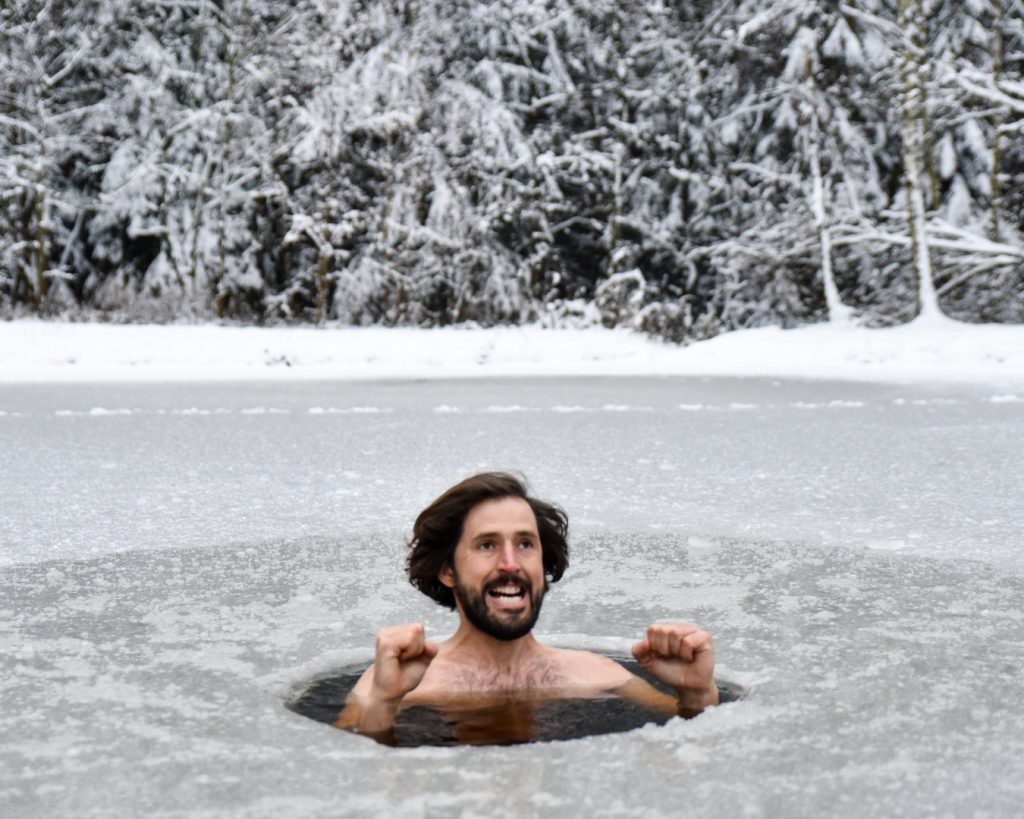
If you go the outdoor route, stop when you're about to shiver. Never go past that point. Honestly, we don't recommend this third option. More often than not, you'll just end up catching a cold. So we'll focus on cold showers. They're a challenge most of us can actually take on.
What's the Right Protocol for a Good Cold Shower?
Warning! Before you start, understand that this exercise carries a risk of cold shock and even heart attack. Don't copy the reckless stunts you see on YouTube. Go step by step.
Here's a method to help you do exactly that, and to build up your time in the cold little by little.
Once you're used to it (this isn't for beginners), try this: during your cold shower, let the warm water come back gradually, then finish on cold. This is known as the Søberg principle. Her research shows you get the best results when you let your body warm back up to its normal temperature on its own.

The protocol, in FAQ form:
- How cold should the water be?
If you're shivering or your breath catches, it's too cold. You're pushing your capacity to adapt too hard.
- Getting started:
If you're a beginner, start by adding a bit more cold water to your usual shower. Aim for lukewarm. Little by little, move from lukewarm to cold, until you hit a small point of discomfort. The moment it starts to feel a bit unpleasant, you're creating deliberate stress for your body.
- How long should you stay under the cold water?
Start with 30 seconds under the cold water. Add a little more time each day. Eventually you'll reach about 90 seconds. Once that no longer feels unpleasant, you can turn the temperature down further. Take it one step at a time. Don't force it.
Once you can take a cold shower from start to finish, you've reached the holy grail of this practice.
- Should you take a cold shower every day?
Die-hard fans will tell you yes. But the science suggests 10 to 15 minutes of cold exposure per week. That works out to 2 to 4 sessions of a few minutes each.
- To get the most out of the exercise, learn to notice discomfort as it builds
That first flash of discomfort is the moment your body releases norepinephrine and epinephrine. At that point, the unpleasant feeling may grow stronger.
Pay close attention to that moment. We call it the wall of discomfort. You're choosing to face it and push through it, so it feels less intense. Over time, the wall starts to fade. After a few days of practice, you'll barely notice the discomfort at all.
Part of this is habit. But a huge part is psychological. That's why it matters to notice the wall and decide to go past it. Every time you do, you send your brain a message of courage and willpower. And that carries over into your everyday life.
- Use your breath to stay under the cold water. Technique #1: It may sound counterintuitive, but the best approach is two short inhales through your nose, then one long exhale through your mouth. This helps you push through right when the discomfort hits.
- Technique #2: Take a quick, short inhale, then breathe out forcefully while tensing your muscles. This helps raise your body temperature.
Use your breath to find calm in the discomfort. Once you're back in control, stay as relaxed as you can and count the seconds.

- Take Your Cold Shower First Thing in the Morning
Morning is the best time for a cold shower. When you expose your body to cold, you create a temperature shock. Your core temperature drops suddenly. In response, your body works hard to warm itself back up, especially after the shower.
Doing this in the morning helps you think much more clearly all day long.
At night, it's a different story. To fall asleep, your body needs to lower its core temperature by about 2 to 5°F. A cold shower in the evening can make it harder to fall asleep and disrupt your sleep.
One Last Word of Caution
Doing cold exposure every day doesn't mean your body is always ready for it. Listen to your body first.
If you feel run-down or tired, give your body time to recover before you try cold exposure.
Enjoyed this article? Listen to episode 43 of our podcast Une Alchimie de l'Éveil (in French) to dig deeper into the topic.
A Look at Traditional Chinese Medicine
Science has shown many benefits of cold exposure. Even so, traditional Chinese medicine tends to be wary of the practice.
In traditional Chinese medicine, the body holds a vital energy called Qi. It flows through channels known as meridians. According to this tradition, you should avoid any sudden exposure to certain elements that affect the balance of your organs, such as dryness, dampness, heat and cold.
Frequent, extreme exposure to one element could disrupt what's called Shao Yin balance: the pairing of the kidneys and the heart. This pairing matters a great deal in Chinese medicine. The kidneys store your vital energy, or Qi. And the heart is known as the “emperor” of the organs.
Chinese medicine doesn't see any sudden shock to the body as helpful. Its goal is the right balance between Yin and Yang.
So during cold exposure, the kidneys take a sudden hit. They're pushed to overreact. Heat is linked to the heart, and the body needs heat. So the kidneys ask the heart to send a surge of energy to warm you up.
In short, from the Chinese medicine point of view, the kidneys and the heart are overworked here. And regular cold exposure could throw off your Yin-Yang balance.
Originally published in French on Konxus Média ↗