 Iker Aguirre
7 Tools to Try for Better Sleep
Struggling to sleep? Here are seven practical methods and tools that can help you sleep better and get your restful nights back.
Sleep is a basic part of daily life. Yet for a lot of people, a good night's sleep is a real challenge. Sound familiar? Then this article is for you.
Sleep problems can hurt your quality of life. They make it harder to focus, to work, and to connect with other people. Watch for the warning signs: trouble falling asleep, waking up often during the night, nightmares, or feeling drained in the morning. Any of these can point to a sleep disorder.
Maybe you just have trouble falling asleep. Maybe your problems run deeper. Either way, we've put together a simple, practical guide. It will help you understand what's behind your sleep problems and find ways to feel better day to day. Check out our 5 healthy habits for better sleep.
In this article, we'll walk you through our top seven methods and tools to help you sleep better and get your restful nights back.
Want to go deeper? Listen to episode 45, “Finally Sleep Like a Baby,” on our podcast Une Alchimie de l’Éveil.
1. NSDR: Rest Deeply During the Day Without Sleeping
Yes, another strange acronym. NSDR stands for “Non-Sleep Deep Rest.” It's a practice that puts you in a state of deep rest while you stay awake. It's a great fit if you find it hard to let go enough to meditate. Is that you? Then give it a try. It's free.
NSDR is a powerful tool. It helps you control how relaxed your nervous system is, and your state of mind in general. It works in two ways. First, certain breathing patterns slow your heart rate and bring on deep relaxation. Second, you can choose what you pay attention to, meaning which sensations you focus on. Put those together and you can shift your brain out of thinking, stress, planning, and anticipating, good or bad. You move into pure sensation and deep relaxation.
All you need is to close your eyes and sit or lie down. That's it.
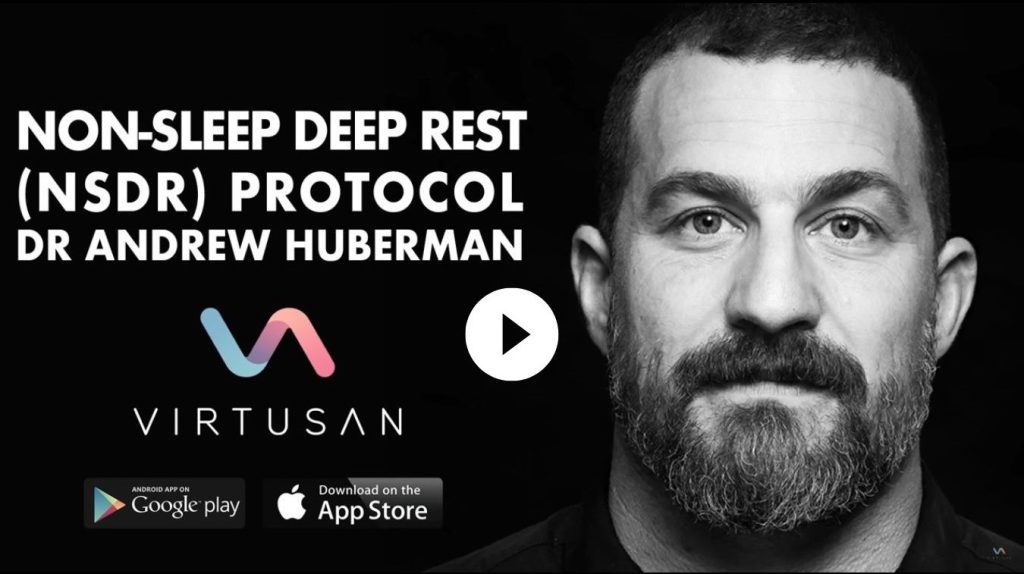
YouTube is full of guided NSDR sessions. Here's one with Dr. Andrew Huberman (link below):
When Should You Use NSDR?
Use it to make up for lost sleep, to fall back asleep after waking up in the night, or to sharpen your focus during the day and improve your sleep over the long run.
So What Exactly Is NSDR?
The term was coined by Stanford neuroscientist Andrew Huberman. This article draws on his research and his podcast, Huberman Lab. Subscribe and follow his work. You won't regret it.
NSDR is very close to yogic sleep, also known as yoga nidra. It's a form of guided meditation. It uses specific breathing techniques to prepare your body and mind for deep relaxation.
During NSDR, your body rests and recovers in a big way. Your breathing and heart rate stay steady. Your muscles relax. NSDR supports physical recovery and memory consolidation. It also helps regulate certain hormonal and metabolic functions.
This practice brings deep relaxation and helps you fully let go. Want the best results? Do it in complete darkness and total silence.
2. The Reveri App
Reveri is a meditation and self-hypnosis app. It was created by American psychiatrist Dr. David Spiegel and built with a team of scientists. It offers several programs to improve your sleep quality and fight insomnia.
Reveri also lets you track your progress. It's the tool you need if it takes you a long time to fall asleep at night, or if you struggle to get back to sleep after waking up. A subscription runs about $10 a month. It's well worth the money.

3. Yoga Nidra: Drift Off Feeling Calm
You practice yoga nidra lying down with your eyes closed. You follow your teacher's voice through mental exercises: meditation, visualization, and relaxation.
Yoga nidra has many benefits. The big one: 45 minutes of practice is said to equal about two hours of sleep. That's why it works so well for people with sleep problems.
You'll feel the benefits from your very first session. And you'll find plenty of free videos on YouTube.
If you'd like an introduction, Julie Gray guides you through yoga nidra in episode 52 of our podcast Une Alchimie de l’Éveil.
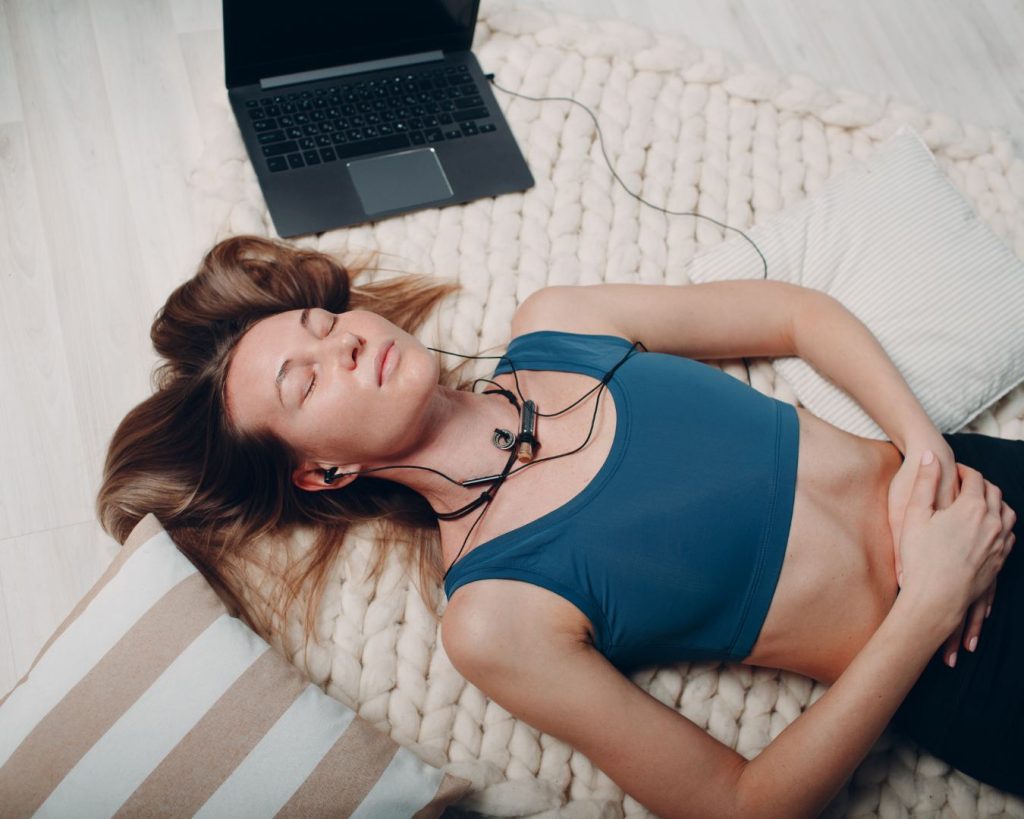
4. Listen to Binaural Beats or ASMR to Relax
Binaural beats work by playing a slightly different frequency in each ear. The goal is to sync up the left and right hemispheres of your brain.
Here's how. When your brain hears two different frequencies, one in each ear, it actually perceives a third one. That third tone matches the difference between the two.
Your brain's ability to sync up through this kind of resonance is remarkable. It has already shown many health benefits: better attention and learning, better emotional regulation, and a sense of calm and well-being.
ASMR works along the same lines and is a great tool for falling asleep. ASMR stands for “Autonomous Sensory Meridian Response.” It's a relaxation method that uses different sounds to bring pleasure and calm. To try either one, all you need is headphones or earbuds. You'll find plenty of binaural beats and ASMR tracks on streaming platforms and YouTube.
5. Wear a Sleep Mask for Total Darkness
Only wear a sleep mask if your bedroom stays at or below 66°F (19°C).
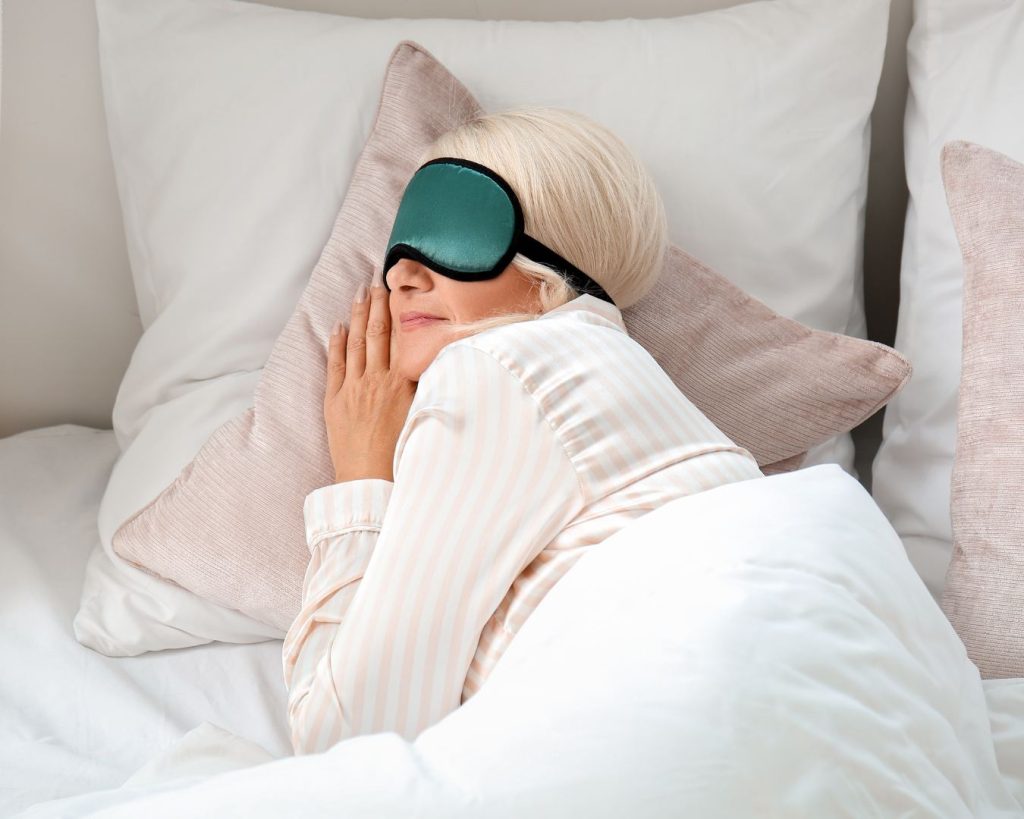
A blackout mask is perfect for creating total darkness. It helps you fall asleep and then supports better sleep quality.
The catch: it covers part of your face that helps regulate your body temperature. So only wear one if your bedroom is cool enough.
6. Elevate Your Feet at Night
This isn't an old wives' tale. Raising your feet will:
- help you sleep more deeply,
- improve your blood circulation during the night,
- reduce swelling and lower the risk of blood clots,
- support your cognitive function and brain health.
One warning. If you have acid reflux, don't elevate your feet at night. Do the opposite: raise your head with a thicker pillow.

7. The Body Scan: A Visualization and Meditation Exercise
The body scan is close to NSDR. It helps you enter a state of deep rest and brings you closer to sleep by clearing out racing thoughts.
This practice sharpens your awareness of your body and how you tune in to it. That pays off in your daily life, too.
If you need help, you'll find plenty of free guided videos on YouTube.
Want to learn more about how this practice can unlock your potential? Check out episode 54 of our podcast Une Alchimie de l’Éveil.

How Is Sleep Structured?
Sleep is made up of cycles that last about 90 minutes. Each cycle includes two types of sleep: REM sleep and non-REM sleep.
- During REM sleep, your brain activity is close to what it is when you're awake. REM stands for “Rapid Eye Movement,” because your eyes move quickly and often under your closed eyelids.
- Non-REM sleep has four stages: falling asleep, light sleep, and two stages of deep sleep.
NSDR resembles a stage of non-REM sleep, when brain activity is slower than during REM sleep.
Originally published in French on Konxus Média ↗