 Iker Aguirre
“Yes, but…”
We're always scanning for the next problem and the enemy out there. But the real obstacle is usually inside us. It's a small reflex with two words: “Yes, but…” It stalls your action. It feeds your fears. It kills your projects before they even start. This article asks you to spot that limi
Let's be honest. All day long, we hunt for what could go wrong. The sneaky problem around the next corner. The enemy waiting to pull a fast one on us. Our eyes stay locked on the outside world, ready for the threat. And most of us miss the obvious. Public Enemy No. 1 is already here. Its name is “Yes, but…”
Warning: extra spicy
If you're ready for some straight talk, keep reading. If you'd rather not shake things up, skip this one. This article won't stroke your ego. Read it in front of a mirror.
Bullshit!
We are masters of lies, excuses, and pretending.
We can see our choices are hurting us. We know the road we're on isn't the right one. We know it's costing us. And we do nothing to change it.
That's when “Yes, but…” shows up. It's the answer that shuts down every invitation to change course.
It's an endless source of stories that convince no one. The only thing they prove is our willingness to put up with the unacceptable.
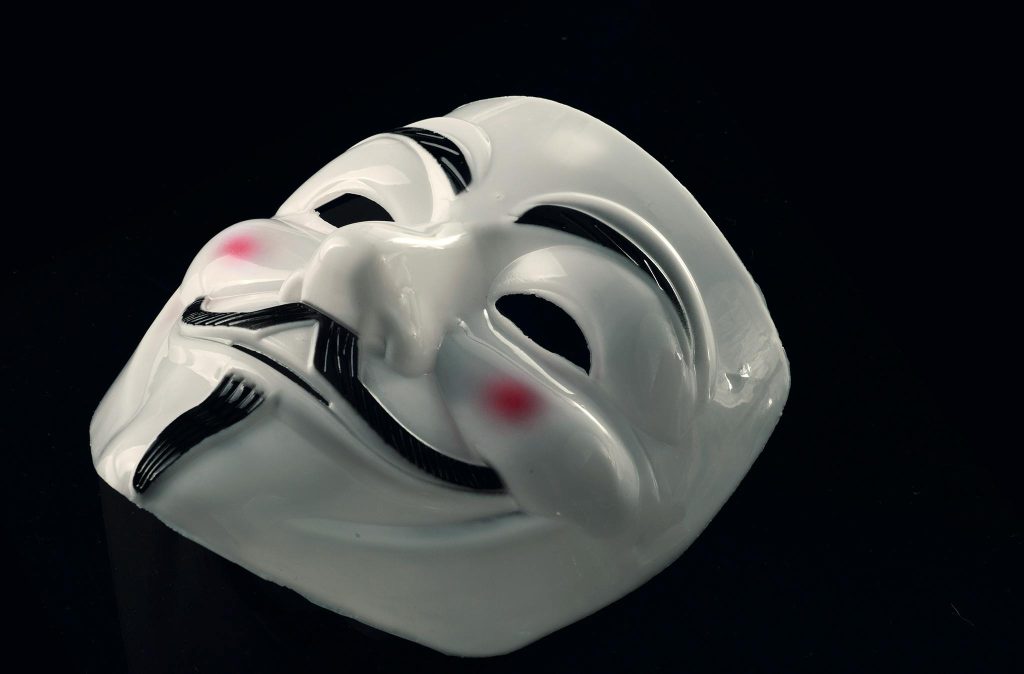
Every day is a costume party
Every morning, you open a closet full of costumes. You get dressed. And you leave someone behind in that closet, hidden and forgotten: the person you really are.
So from morning to night, you play a thousand roles. You play them perfectly. Each day becomes a stage play. And the only real thing happening on that stage is this: you're missing out on the person you wish you could have been.
And once again, the answer is: “Yes, but…”
There are so few of them…
All my life, I've been drawn to people who color outside the lines. Men and women who dared to be themselves and went off to explore the unknown. At first, I thought it was their larger-than-life stories that fired me up. I dreamed of big achievements and limits to break. But I was wrong. What I admired in those people was their light.
It shone in their eyes. It came through in what they accomplished. It inspired through their deep truth. These were men and women who had given themselves what it took to fully express what was inside them. Their light lit me up. It rekindled my own flame, which wanted only one thing: to blaze just as brightly, following their lead.
And yet, people like that are so rare. Why?
Because turning on your light is uncomfortable. It's uncomfortable for you, because it takes a kind of courage many people have lost. And it's uncomfortable for others, because your light casts a shadow over them.
It's also because the norm is to be standard. Stay in line. Follow the rules. In short, the norm is gray and dull. Just like our lives, when “Yes, but…” is running the show.

Dare. Own it. Give yourself permission.
Those three decide both success and failure. Don't look any further. This is it.
“Yes, but…” really means:
I don't dare
I don't have the courage to find out what I'm truly capable of. Or who I really am, with no costume and no act.
I don't own who I am
I can't get past judgment, from inside or from others. Self-image, reputation, belonging, ego, pride, and the rest of the gang. They rule me. They're the kings, and I'm their servant.
I don't give myself permission
I don't give myself the right to express what's inside me. So I smother it. I push it into a corner. I become a bundle of tension, split inside. Then a quiet, creeping unease takes over.
What is happiness, anyway?
On February 13, 2009, I almost didn't make it. A severe burnout led to a stroke. I saw my whole life flash before my eyes. Twice! Then came a conversation that changed my life. A dialogue with a “Voice” about a second chance. No, I would not die that day.
And then I was back. Back with my pain, my lies, and my fake identity. The first question I asked myself was: “What is happiness, anyway?”
The man who had “made it” had a checklist. Every box was checked. For him, happiness meant status, looks, wealth, assets, career, recognition, intelligence, and the win of the self-made man.
The man I really was had his own list. Not one box was checked. Looking back at my life was devastating. A spectacular failure, set in a picture-perfect postcard.
“What is happiness?”
A couch. A blanket. Rest. A book. My cat. And the people I love around me.
So where was the infinity pool I'd been eyeing? The luxury cars? My future as an international tycoon? The “CEO club,” whose big door I only had to push open?
They were just wallpaper. They covered the walls of my lies, along with all the stories I'd chosen to believe.
Because the truth is, that day, under the weight of that brutal self-assessment, the answers came fast. They were crystal clear and final. Happiness is simple. It needs no decoration.
I saw love. I saw connection. I saw self-respect. All of it unconditional. Everything was “already there,” always within reach.
If my happiness felt like it had packed up and left, it's because I had turned my back on it. It never moved an inch. And for years, to justify my choice, I told myself:
“Yes, but…”
But every “but” loses its meaning when death knocks at the door. In that moment, all that's left is the final tally. And when it doesn't add up in your favor, every “Yes, but…” gets crushed by one question:
A relentless “Why?”
And it hurts. It carries the weight of every “Yes, but…” that never should have existed.
What about you? Where do you stand with your “Yes, but…”?

Balance within imbalance
More than 15 years have passed since that day. I'm still searching for the answers to all those questions. Saying I haven't found any would be a gross exaggeration. Claiming I've cracked the code would be pure ego talking. The road goes on, and so does the search.
Still, I've learned one essential thing. Balance doesn't come from a complex mix of factors outside yourself. No. Balance is much simpler than that. And it has nothing to do with splitting work life from personal life. Balance lives in expressing who you are. Fully or partly, but without compromise.
At first, balance is a sum of imbalances that offset each other. It's an illusion. It forces you to keep doing things to manage those opposing forces.
Later, it simply is. No doing required.
Put another way: all you have to do is be, and everything falls into place.
Balance no longer comes from doing things to compensate. It becomes a calm presence, where being comes first and leads the way.
But saying it is easier than living it. “Being” often turns into a demanding order, loaded with conditions and a checklist a mile long. A fresh set of imbalances. Now you're stuck having to be AND do at the same time, compensating to create the illusion of balance. Do you see the vicious circle? Here's the turning point: you realize there's nothing you can ever do to find balance. Then balance happens, because it was always there. It's you, at your core.
That's the Holy Grail. I only know it in theory, based on what the great meditators I've had the privilege of working with tell me. Stéphane Faure, a Konxus mentor, is one of them. They describe a being fully complete in its essence. A being that exists in an eternal, perfectly right reality, beyond time and matter. A being in a space where everything is connected and in its place, where the veils of illusion lift for good.
They call it awakening. Maybe that's where the “Voice” spoke to me from. When I talk about it, I get chills.
So: work-life balance?

That's not the real problem
Believing we have a work life on one side and a personal life on the other is where the cultural charade we grew up with in the West begins. Accepting that split means signing up for a deep, chronic imbalance.
Why? Because we quietly accept that the “personal” part, meaning ourselves, our life, and our inner harmony, is separate from the “work” part. That's where we sign up for our own servitude.
From that moment on, the road is wide open for every “Yes, but…” to run wild. How else could we justify being so out of tune with who we really are?
That's why the real question hiding behind all of this is: are you truly the person you came here to be?
Key takeaways
In this article, Iker Aguirre takes you into the hidden world of “Yes, but…”:
- “Yes, but”: a subtle form of resistance to change
- An unconscious self-sabotage mechanism
- The many faces of “Yes, but”
- The hidden payoffs of not taking action
- How to spot your own “Yes, but”
- Taking back ownership of your choices
Originally published in French on Konxus Média ↗